
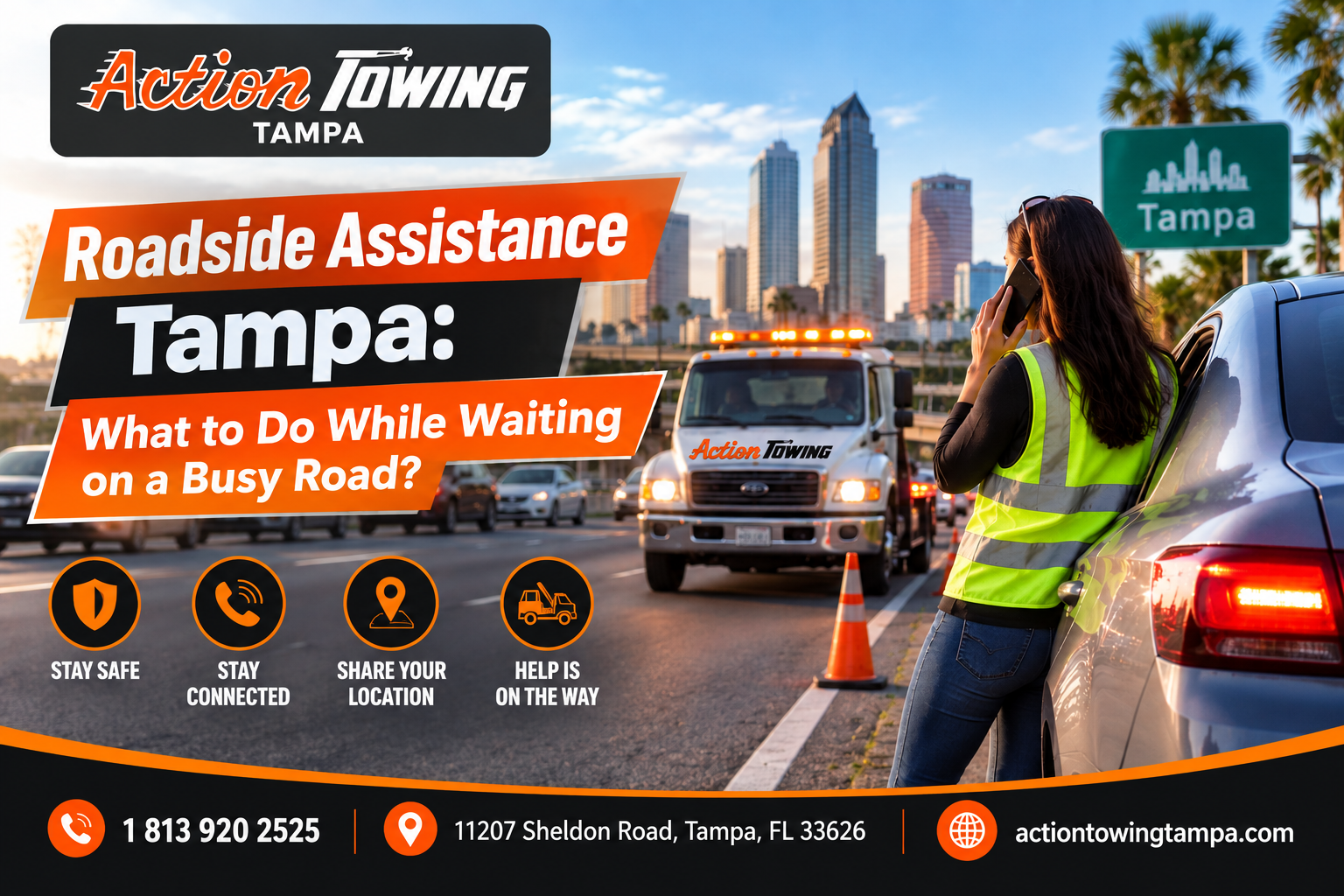
Roadside Assistance Tampa: What to Do While Waiting on a Busy Road?
Getting stuck on a busy road in Tampa Bay is stressful, especially when traffic is moving around you and you are not sure how long you will have to wait to get out of the traffic and reach your destination. If your vehicle problem can be sorted out by roadside assistance, then calling for roadside help is an important first step, but there are still a few things you should do before the service provider arrives. Once you have called a reliable provider for Roadside Assistance Tampa, your main job is not to diagnose the vehicle or attempt a difficult repair. Just focus on staying safe, making your location easy for roadside assistance professionals to find, keeping your phone available, and being prepared when help arrives.
If possible, move to a safer location.
If your vehicle can still be moved safely, get it out of the active traffic lane and onto a suitable shoulder, parking lot, or side street, as this may provide more space between you and passing vehicles. Do not continue driving if a vehicle has a serious mechanical or safety problem. Find a better place to stop, and if you need a tow, don’t hesitate to call Emergency Towing Tampa in this condition.
If your vehicle has reached a little safer location from the busy Tampa roads than
- Put the vehicle in park if available.
- Set the parking brake.
- Use your hazard lights if you are near roads so all drivers know your vehicle has a problem and will keep a safe distance from you and your vehicle.
- Stay aware of nearby traffic on the road.
- Avoid standing close to moving vehicles on the road.
If the vehicle cannot be moved safely, then leave it where it is. You should call reliable towing services in Tampa, give them all the information and details, and focus on keeping yourself and your passengers safe.
Provide your exact location to the professionals.
Before the roadside assistance arrives, make sure you know exactly where you are. You should provide your exact location and details about it to the provider, as it helps them find you easily and you will get help sooner. Provide an exact or near-exact location; you should clearly look at:
- Road or highway name
- Direction of travel
- Exit number
- Mile marker
- Nearest intersection
- Nearby business or landmark
- Parking lot name
- GPS location on your mobile
If you are unsure, use your phone’s map to confirm your position to the roadside assistance provider.
Keep your mobile ready
Your phone may be your main way to communicate with the roadside provider, so keep it available for calls and messages. If your mobile battery is low, turn on battery-saving mode and avoid unnecessary use.
Your phone can be a lifesaver, as it can be used to:
- Share your location with the provider.
- Receive an arrival update from the team.
- Check the map for your location.
- Contact someone you trust before the help arrives.
- Give the driver additional directions.
And if you have a vehicle charger or portable battery, use it to keep your phone available.
Update the Provider if Something Changes
Your situation might change after making the initial call, such as you may move the vehicle to a safer location, discover that it can no longer move, or find that traffic around you has become more dangerous; therefore, you should keep your phone ready and be in touch with the provider until the help arrives, and let the provider know if an important detail changes, including:
- Your location
- The vehicle’s ability to move
- The condition of the vehicle
- A change in safety conditions
- Your need for towing instead of roadside service
Avoid Risky Repairs While You Wait
It can be tempting to start working on the vehicle while you wait, especially if you think the problem may be simple.
However, a highway shoulder or busy roadside is not a safe place for every repair.
Avoid working on the vehicle if you would need to:
- Stand close to moving traffic.
- Walk along a highway.
- Crawl underneath the vehicle.
- Work in darkness or poor visibility
- Use tools you are not comfortable handling.
If the vehicle is safely parked away from traffic, the situation may be different. Otherwise, waiting for professional roadside assistance in Tampa may be the safer choice.
Keep Important Belongings With You
If there is a chance your vehicle will need to be towed, then gather important personal belongings while you wait, and you should consider taking your belongings safely, such as:
- Phone
- Wallet
- Identification
- House keys
- Medication
- Important documents
- Valuable electronics
- Work equipment
Have Your Vehicle Information Ready
When the roadside assistance arrives, the basic information about your vehicle can make the hand-off easier; therefore, you should provide your vehicle information to the team, such as:
- Make and model
- Vehicle color
- License plate
- Exact location of your vehicle
- Basic description of the problem
- Whether the vehicle can move or not
- Desired towing destination, if needed
What If Help Takes Longer Than Expected?
Helps, including roadside assistance or towing, may have arrival times that change due to various factors such as traffic, distance, weather, demand, or other circumstances. If your estimated arrival time changes, then contact the provider for an update.
While waiting, you should:
- Keep your phone available.
- Stay aware of traffic.
- Keep your location details ready.
- Avoid unnecessary roadside activity.
- Report important changes to the provider.
Be Ready if Your Vehicle Needs a Tow
Roadside assistance does not always mean the vehicle can be repaired where it stopped. Based on the situation and condition, your vehicle might require a tow. Some problems can be handled at the roadside, while serious mechanical or accident-related damage may require towing.
If towing becomes necessary, provide a required destination to the professional towing services team, such as:
- A repair shop
- A dealership
- Your home
- Another suitable location
Final Thoughts
Being stuck on the busy Tampa road can be stressful and annoying, but knowing what to do while help is on the way can make the situation easier to manage. After calling for roadside assistance or towing services in Tampa based on your condition and requirements, you should focus on staying out of traffic, keeping your vehicle visible, knowing your exact location, keeping your phone ready, and avoiding risky repairs or unnecessary movement around the vehicle, especially on busy roads or highways. If your location or vehicle condition changes, let the provider know. The main takeaway is simple: stay safe, stay reachable, and be ready when help arrives. A little preparation can help you handle an unexpected roadside problem with less stress and get back on the road or to your required location safely.
Frequently Asked Questions
Should I stay inside my car while waiting for roadside assistance?
It depends on where your vehicle is stopped. If you are near fast-moving traffic, staying inside with your seat belt on may be safer than standing beside the vehicle. If you are in a safe parking area, you can get out of your vehicle and wait for help.
What should I tell the roadside assistance team when they call?
You should provide your details to the roadside assistance team, including your exact location, vehicle make and model, license plate, and a simple description of the problem. If the vehicle cannot move or your location has become unsafe, mention that as well.
What if I cannot find a safe place to stop?
If you cannot find a safe place to move your vehicle, do not take unnecessary risks by moving it farther. If it can be moved safely, get it away from active traffic. If it cannot, use your hazard lights when appropriate, stay alert, and clearly communicate your location to the provider. If there is an immediate danger, contact emergency services.
Should I try to fix my car while I wait?
Only consider it if you have the required accessories or, most importantly, if you know how to repair your vehicle, if you are in a genuinely safe location, and if you don’t know, then wait for the help to arrive and avoid working beside moving traffic or underneath a vehicle on the roadside.
What should I do if the roadside assistance is taking longer than expected?
Keep your phone available and contact the provider for an updated ETA. Continue watching your surroundings and let the provider know if your location or vehicle condition changes.


Recent Comments